You have foundation ready, but the tool choice can change how long application takes and how much cleanup follows. A sponge and a foundation brush can both spread liquid or cream products; neither is automatically the better choice for every routine. Start with the finish and feel you prefer, then consider care.
How Each Tool Applies Foundation
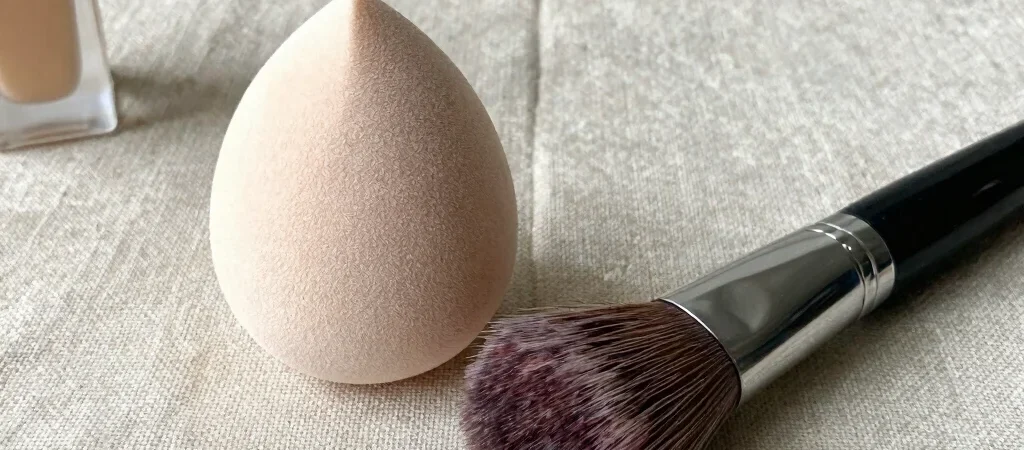
A damp makeup sponge is pressed or bounced over the skin, which can help sheer out foundation and soften visible edges. A brush uses bristles to spread and blend product, and brush shapes vary: a flat top, tapered head, or smaller buffing brush will each feel different. Tool shape and technique matter as much as the broad sponge-versus-brush distinction.
The Routine Trade-Off
A sponge needs to be dampened before use and cleaned regularly; it also needs time to dry between uses. A brush can be picked up dry and may suit someone who wants a more controlled sweep or buff, but its bristles also need washing and drying. If you prefer quick setup, account for the sponge’s dampening step; if you dislike a bristled feel, try a sponge technique instead.
What to Check Before Buying
For a sponge, check its shape, size, and whether the maker gives clear care instructions; a pointed end can be useful around the nose, while a broader side covers larger areas. For a brush, look for a shape suited to how you apply foundation and details about bristle type and cleaning. If this guide contains Amazon affiliate links, we may earn a commission from qualifying purchases; that relationship does not change the comparison, and you can use these considerations without buying either tool.